Methyl Linolenate Oxidation and Combustion
Methyl linolenate, which is predominantly α-linolenic acid methyl ester, belongs to the class of unsaturated fatty acid methyl esters. At room temperature, it is a colorless to pale yellow oily liquid that is insoluble in water but readily soluble in organic solvents such as ethanol and n-hexane. Its molecule contains three carbon-carbon double bonds, making it prone to oxidation and polymerization reactions. It is generally prepared by methyl esterification of flaxseed oil and is commonly used as a gas chromatography standard for the analysis of lipid components; it can also be used in organic synthesis and biochemical research. Methyl linolenate possesses certain antioxidant-related biological activities and serves as a common substrate in studies of biological metabolism.

NMR & Computation: Methyl Linolenate Hydroperoxides
A combination of selective 1D Total Correlation Spectroscopy (TOCSY) and 1H-13C Heteronuclear Multiple Bond Correlation (HMBC) NMR techniques has been employed for the identification of methyl linolenate primary oxidation products without the need for laborious isolation of the individual compounds. Complex hydroperoxides and endo-hydroperoxides of methyl linolenate were identified and quantified, with the combination of selective 1D TOCSY and 1H-13C HMBC NMR techniques without laborious isolation of the individual components. Their three-dimensional (3D) structures with assignment of pairs of diastereomers in solution were elucidated, for the first time, with the combined use of 1H-NMR chemical shifts, Density Functional Theory (DFT) and Our N-layered Integrated molecular Orbital and molecular Mechanics (ONIOM) calculations. Methyl linolenate was selected as a suitable representative of omega-3 fatty acids that contains three methylene intruded cis double bonds. Data illustrates the 1H-NMR spectrum of a sample of methyl linolenate, which was allowed to oxidize in atmospheric oxygen in a glass vial for 48 h in a conventional oven at 40 °C, and it was subsequently dissolved (20 mg of sample in CDCl3). A very significant number of sharp 1H-NMR resonances (Δν1/2 ≤ 2.0 Hz) of the hydroperoxide C–O–O–H protons in the region of 7.7 to 9.6 ppm was observed. The addition of 1 to 2 microdrops of D2O resulted in the elimination of the majority of these signals including those in the strongly deshielded region of 8.8 to 9.6 ppm, where resonances of saturated and unsaturated aldehydes, as secondary oxidation products, would be expected to appear.[1]
Fuel Preheat Effects on Soot in Methyl Linolenate Flames
High population growth and environmental degradation are some of the key factors that demand a search for a substitute fuel (Mao et al., Citation2020). Biodiesel is one of the fuels that can be used as an alternative because it is environmentally friendly and can be synthesized from renewable materials. Biodiesel consists of five major components. The constituents are methyl linolenate (MLe), methyl linoleate (MLi), methyl oleate (MO), methyl palmitate (MP), and methyl stearate (MS), the proportions of these methyl esters vary depending on the type of feedstock. Previous research has focused on the performance and emissions of preheated biodiesel and biodiesel blends in various combustion devices. Various types of biodiesels have been used to study the effects of preheating, though the effects of preheating major biodiesel components on soot formation is still unclear. As a result, the purpose of this research is to investigate the effects of preheating major biodiesel components on soot formation by determining the rate of soot nucleation and soot volume fraction in a preheated Methyl linolenate co-flow jet flame. The rates of nucleation, coagulation and soot volume fraction were simulated using the semi-empirical Moss-Brooke soot model within the ANSYS FLUENT software. Insight on the effects of preheating biodiesel components on soot formation aids in understanding the soot formation in biodiesel individual components.[2]
The main limitation of this study was the lack of experimental data on combustion of methyl linolenate fuel for validation. Though there is no experimental data, the model flame temperatures were validated using biodiesel methyl esters temperature range because MLe is one of the major biodiesel components. Therefore, this model can be used to study the effect of preheating methyl linolenate on the rate of soot nucleation and soot volume fraction. Uncertainty and limitation of the simulation in this study are associated to the chemical kinetic model and soot formation model adopted. Moss-Brookes soot model that was used in this study limited simulation of soot formation and analysis. The study examined the effect of preheating fuel on nucleation rates, coagulation rates, and soot volume fraction in methyl linolenate co-flow diffusion flame, with initial fuel temperatures ranging from 300 to 450 K. It was established that an increase in fuel preheat temperatures causes an increase in nucleation rates and the amount of soot due to accelerated fuel pyrolysis, improved diffusion, acceleration from buoyancy, and earlier formation of PAHs. It was discovered that increasing the fuel preheat temperature had a greater impact on soot formation along the centerline than on the wing.
References
[1]Ahmed R, Varras PC, Siskos MG, Siddiqui H, Choudhary MI, Gerothanassis IP. NMR and Computational Studies as Analytical and High-Resolution Structural Tool for Complex Hydroperoxides and Diastereomeric Endo-Hydroperoxides of Fatty Acids in Solution-Exemplified by Methyl Linolenate. Molecules. 2020 Oct 23;25(21):4902. doi: 10.3390/molecules25214902. PMID: 33113947; PMCID: PMC7660186.
[2]Kiraithe, R. M., & Tanui, J. K. (2024). Effects of fuel preheat temperature on soot formation in methyl linolenate co-flow diffusion flames. Cogent Engineering, 11(1). https://doi.org/10.1080/23311916.2023.2300552

You may like
See also


Lastest Price from Methyl linolenate manufacturers
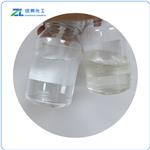
$45.002025-04-21
- CAS:
- 301-00-8
- Min. Order:
- 1kg
- Purity:
- 99%
- Supply Ability:
- 20 tons
$1.002024-05-26
- CAS:
- 301-00-8
- Min. Order:
- 1KG
- Purity:
- 99%
- Supply Ability:
- 2000ton